TaipeiEcon
Inventory of all articles of TaipeiEcon
Inventory of all articles of TaipeiEcon
The value of a venue is not measured solely by the influx of people on the day of an event. What also matters is how it converts that foot traffic into growth through integrated transportation, connected commercial districts and optimization of public spaces. In Taipei City, the four core venues of Taipei Dome, Taipei Arena, Taipei Music Center, and Taipei Performing Arts Center (TPAC) were elevated from performance venues into strategic engines for revitalizing local businesses and urban spaces. A three-pronged planning approach that combined transportation integration, commercial district and regional connections, as well as venue access and acceptance systematically upgrades the urban competitiveness and quality of life in Taipei City as a whole.
According to the "Asia Pacific Live Music Market Report", the Asia Pacific live music market surpassed US$7.5 billion in size in 2025 with a compound annual growth rate (CAGR) that approached 10%. Taipei City is therefore well-prepared to host international performances/exhibitions and consumption spending due to all the large venues in the city. Whether the venue economy can be truly disseminated to become urban benefits is decided by more than the venue itself. There is also how transportation, foot traffic, commercial districts, accommodation, and the street-scape are connected together. Taipei City Government is therefore focusing on building up the overall capacity around the malls. Transportation integration is used to reduce friction for those entering or leaving the venue. Connections with commercial districts also channel foot traffic to nearby locations for consumption. Venue accessibility and public participation are also employed to gradually transform venues into a part of everyday city life.
Venue capacity is decided by the size of the hardware but the upper limit of the venue's yield is determined by how many people "can easily enter the venue, and casually leave the venue." The essence of transportation integration is to reduce the time cost and mental resistance for people entering or leaving the venue. This makes it easier for the public to participate, with flow-on effects in terms of city stays and consumption.
The following three strategies were therefore promoted by Taipei City Government: Strengthen the spatial interface between venues and transportation nodes; introduction of smart systems for real-time foot traffic dispatching, as well as optimization of venue accessibility.
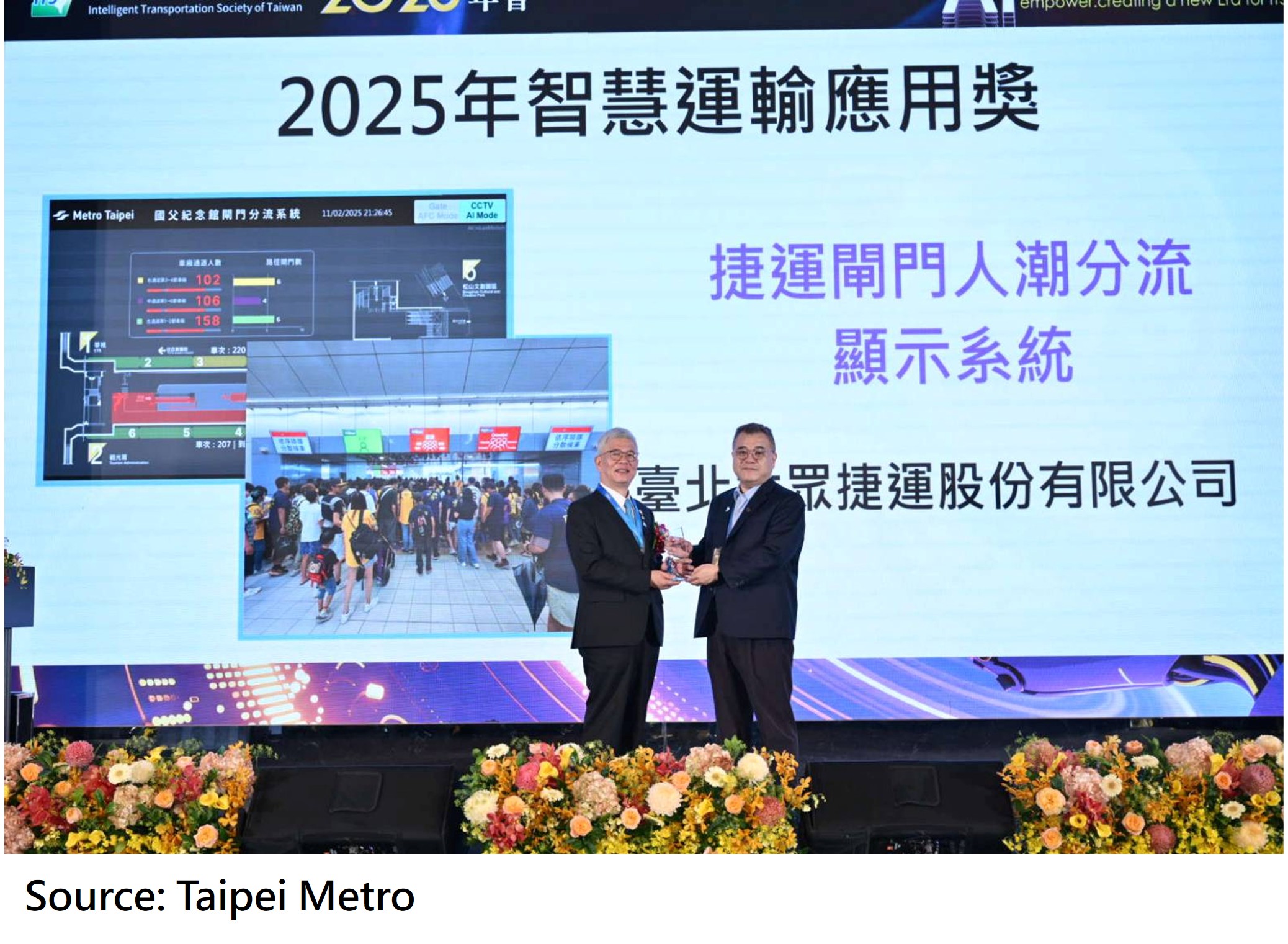
Taipei Dome, for example, opened with a total capacity of around 40,000 people. In terms of spatial interface, the "Garden Corridor" underground mall on B2 was opened in September 2024. The linking of Sun Yat-sen Memorial Hall MRT Station with the infield entrances of the venue improved the convenience of entry movement lines. In terms of smart dispatching, the "Gate Crowd Diversion Display System" was installed by Taipei Metro at the Sun Yat-sen Memorial Hall MRT station. AI image recognition and real-time visualization technology were used to define three movement lines for incoming traffic within the station. Green, yellow, and red signals were used to divert passengers to the appropriate platform area.
The system has been used to support 165 events at Taipei Dome up to the end of October, 2025. Concerts with more than 35,000 people can now on average be dispersed after 33 minutes, resulting in the system being presented with the 2025 ITS Application Award. During large-scale events, service interval on the Bannan Line is also compressed to between 2–3 minutes. Free entry at Nanjing-Sanmin MRT Station encouraged crowds to disperse to other local stations, increasing the overall transportation efficiency even more.
In terms of venue accessibility, Taipei Music Center (TMC) is situated between Nangang Station and Kunyang Metro Station. It can therefore be reached on foot via Taiwan Railway, Taiwan High Speed Rail (THSR), or the Metro Bannan Line, giving visitors more transportation options. The Taipei Performing Arts Center on the other hand features an elevated main building where the public space on 1F is connected directly to the Jiantan MRT station. Arriving at the station means audience members have arrived at the venue as well. The entry movement lines naturally overlap with the local street activities in Shilin. That is not all either. The existing Chinese, English, and Japanese signage of the Taipei Performing Arts Center were joined by Korean, Hakka, and Taiwanese versions in April 2025. Reducing the language barrier improved accessibility for more ethnic groups.
The gathering of crowds at venues is just the starting point. How to effectively channel the foot traffic into the surrounding businesses and convert them into sustainable precinct consumption is the core challenge in venue economy. The Taipei City Office of Commerce defined "Point - Merchant Mentoring, Line - Commercial District Revitalization, Plane - Linked Corridors" as the development framework for commercial districts. Under this framework, venues are considered high-density traffic nodes. Institutional design is employed by Taipei City Government to disperse the crowds over a larger part of the precinct. Event benefits are thus spread beyond the venue itself to cover the entire city.
The travel accommodation linkage for Taipei Arena is based around the "Taipei Nice Stay" platform with 161 accommodation vendors. Ticket stubs entitle audience members to discounts on accommodation, food and beverage, forming a stable hybrid consumption model through "attend performance + Taipei stay." The mechanism is not limited to a single event. Instead, it is set up as a traffic diversion tool so that every event can generate benefits for the accommodation industry.
Taipei Arena on the other hand expands the scope of consumption through cross-domain integration. When Taipei Metro Recreation (TMR) was established in July 2025, it launched promotional events such as "Tri-Venue Celebrations" and "Taipei Arena 20th Anniversary Appreciation Campaign" linking Taipei Arena, Taipei Children's Amusement Park, and Maokong Gondola. Members of the public could combine shows, family outing, and natural excursion all into one trip. Consumption motivation in a single trip was therefore laterally expanded to multiple domains. The "Taipei Arena 20th Anniversary Appreciation Campaign" alone attracted up to 120,000 participants.
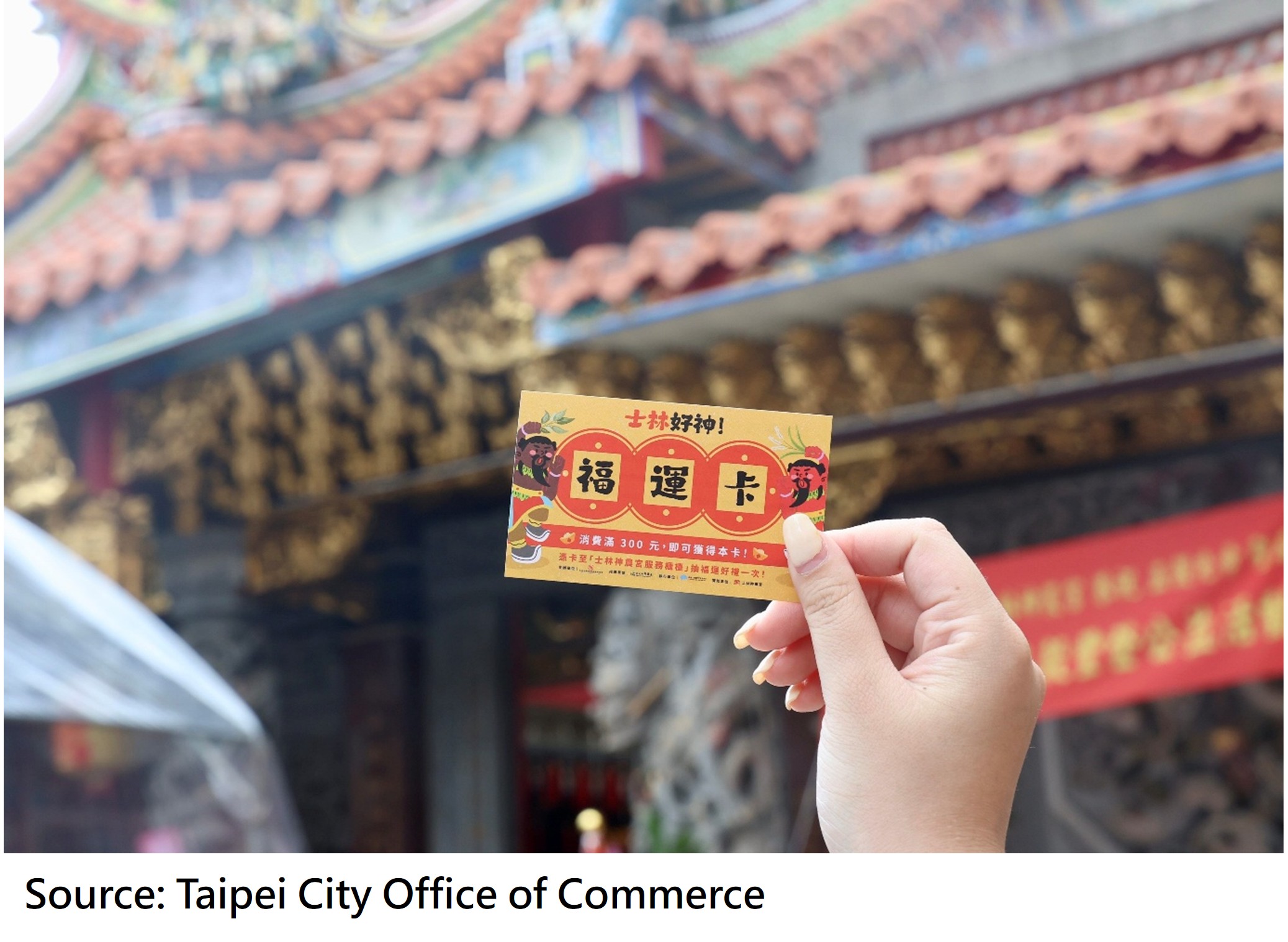
In terms of linkage between cultural venues and local commercial districts, in 2025 TPAC transformed its outdoor square into a regular free performance space under the "TPAC Living" program. Art and cultural experiences were used as an incentive to keep the crowds in the Shilin precinct. At the same time, the Taipei Shilin MRT Commercial District Creative Development Association made Shennong Temple the focus of its "Shilin Good God Cultural Business District & Sustainable Future - Shilin Shennong Festival" campaign. The complementary relationship between the venue and precinct in terms of space and time helped to revitalize the local district.
That was not all. In 2026, the "Show Up Taipei" event brought the four venues of Taipei Arena, Taipei Dome, Taipei Music Center, and TPAC together to set up a cross-venue common marketing platform. Tickets to the opening games of Chinese Professional Baseball League (CPBL) on March 28–29, 2026, could be registered for the chance to win coupons to the commercial district, night market, and local market. Show watching was extended to peripheral consumption to establish an urban experience for "watch a show, visit the commercial district, spend and enjoy." The connection between venues and commercial districts was also expanded beyond single-point collaborations to holistic promotions.
Transportation integration allows for free passage of foot traffic in and out of the venue. The linkages with commercial districts converts traffic into buying power. Venues have built on these foundations through greater availability and diversity, forming a closer connection with their surrounding precinct and local life. Through open planning, reduction of spatial boundaries and the ongoing introduction of everyday cultural activities, the venues are no longer just a place for hosting specific activities. Instead, they have become public spaces where city residents can linger, pass through, and use. The benefits of foot traffic and events are now extended into everyday life as well.
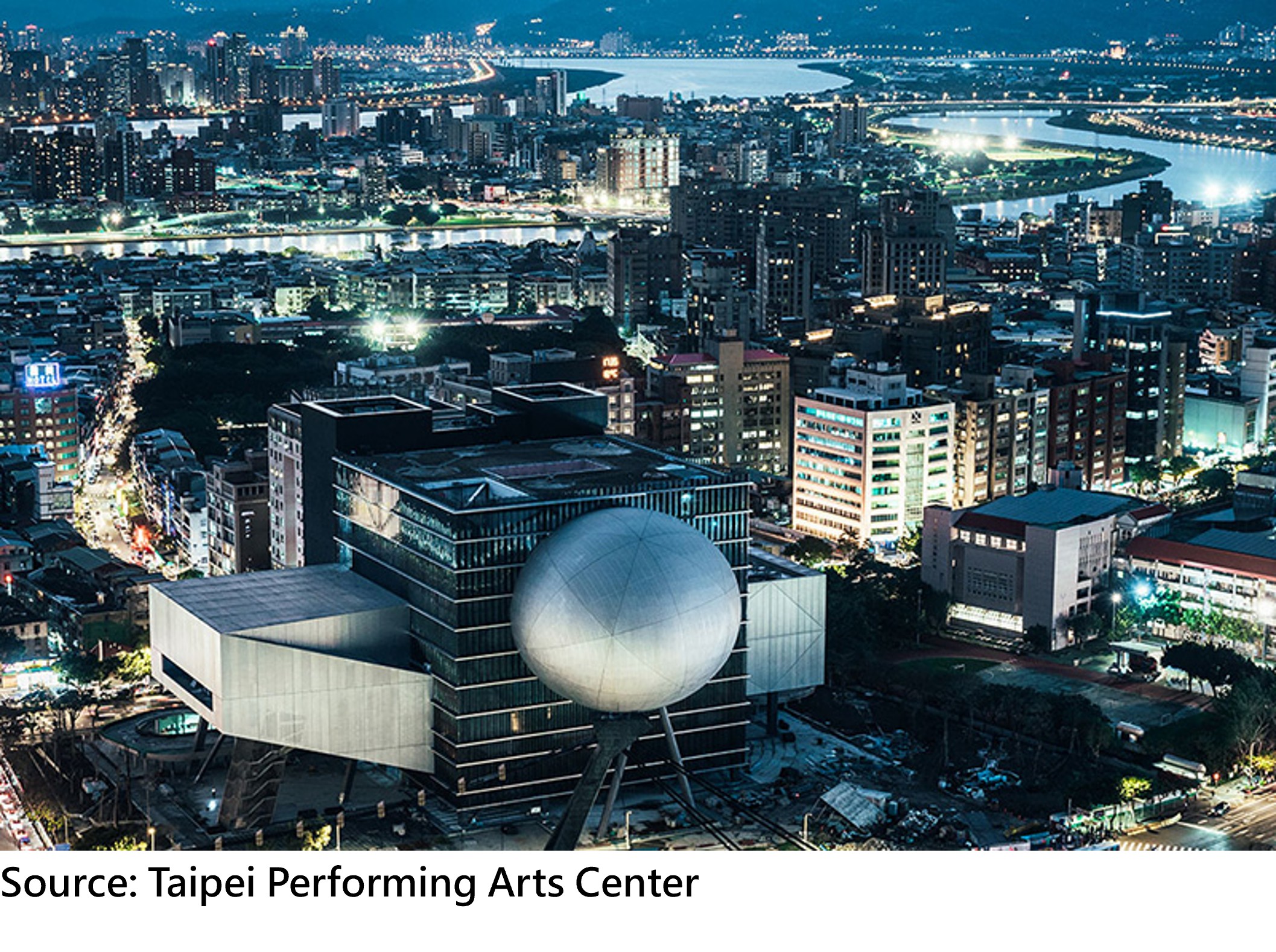
The TPAC offers a convincing demonstration. Designed by the architects Rem Koolhaas and David Gianotten, the main body of the building is elevated to leave the ground floor free, forming an open plaza with no walls or controlled gateways. The TPAC is therefore still open to the public outside of performances making the plaza a public space through which residents can pass through on an everyday basis. The "TPAC Living" program mentioned before converted part of the plaza into a space for regular free performances. In the first half of 2025, 12 performances ranging from music to dance were held at the small stage to attract the interest of passersby. The "TPAC Walks: A Guided Stroll in Shilin" led members of the public on an exploratory tour of surrounding cultural landmarks and local assets, turning the venue into a key gateway for learning about local culture.
At the Taipei Music Center, the "Nangang & TMC - Museum Without Walls" program expanded the venue's public space to encompass the entire precinct. The "Without Walls" concept broke down the internal and external boundaries of the venue. Linkages to POPOP Taipei and ARK.Taipei(N24) nearby created a route for urban roaming in the Nangang region. When members of the public set out from TMC and pass through different cultural domains along the way, the process of movement itself becomes an immersive experience that extends the venue beyond a single building to defining the atmosphere for the entire precinct. Taipei City Government is also collaborating with accommodation providers such as The Place Taipei and Courtyard by Marriott Taipei to incorporate this roaming route into their urban travel itinerary. Gradually, Nangang will transition away from its industrial past into an urban travel destination for culture and tourism.
Initiatives such as transportation integration, connected commercial districts, and open venue have gradually transformed venues in Taipei City from just stand-alone event venues into spatial facilities that drive a city in motion. Investments in different areas are continuing to be converted in ongoing support for the city's development.
In transportation integration, Taipei Metro's Gate Crowd Diversion Display System has not only successfully increased its crowd carrying capacity during large events but has also won recognition in international competitions. Taipei City scored top marks in the indicators for traffic and transportation in the IMD Smart City Index 2024. Placing 16th in the world and 5th in Asia demonstrated the city's consistent performance in both convenience and quality of transportation.
In commercial district and regional development, past efforts are beginning to bear fruit. Crowds from venues are dispersing into the surrounding area and forming a stable consumption cycle. According to city statistics, the TMC is now drawing large crowds after five years of careful development, boosting the local industry output in Nangang by over NT$700 million. This is clear proof that the venues are successfully revitalizing their precincts; at the same time, more than 2,700 events have been held at Taipei Arena since it was opened 20 years ago resulting in a cumulative audience of more than 21 million people. Be it regular operation of the accommodation partner mechanism or the traffic build up by the venues over time, this showed that the venues are already helping to spur ongoing local development.
In terms of open spaces, the venues are gradually becoming a part of everyday life for city residents. The open-plan design of TPAC was selected by CNN Style as one of its "transformative buildings set to shape the world in 2021" and won praise from the international architectural community; the "Without Walls" spatial philosophy of Taipei Music Center helped Nangang shake off its industrial past and turn into a tourist precinct worth visiting. The venues not only boosted local engagement but also encouraged outside visitors to venture deep within the precinct. The building itself becomes the starting point for a cultural experience, further enhancing both the city's image and international visibility.
For Taipei City, the development of the venue economy no longer depends on temporary peaks generated by events but is instead continuously built up through everyday operations. As transportation integration continues to improve, commercial district linkages become a regular occurrence, public spaces continue to be revitalized, and the associated mechanisms become more mature, Taipei City will gradually build up its competitive edge against other international event-hosting cities. The steady operation of the various mechanisms means the role played by venues are now expanding beyond event venues to become a part of city life. A venue economy and city scape with unique local character will ultimately emerge.